Bureau October 2025
30.10.2025
Presentation of the AXA Fund for Human Progress
Clément Rouxel presents the AXA Foundation for Human Progress, which centralises the Group's philanthropic activities to maximise its societal impact. Aligned with AXA's purpose — ‘acting for human progress by protecting what matters’ — it is based on four complementary pillars:
Science, Solidarity, Inclusion and Education, Protection of the Planet, and Arts, Culture and Heritage.
A new strategic initiative: supporting creativity to help companies in their innovative endeavours.
The fund, endowed with €60 million per year (following a recent doubling of its budget), is managed by a team under the supervision of a board of directors.
Since June, two major projects have been launched.
At the same time, a partnership with the World Monument Fund, through the WATCH programme, is preparing actions to preserve world heritage in Europe starting next year, illustrating the commitment to sustainable and targeted projects.
Second information session on the latest developments in artificial intelligence within the AXA Group
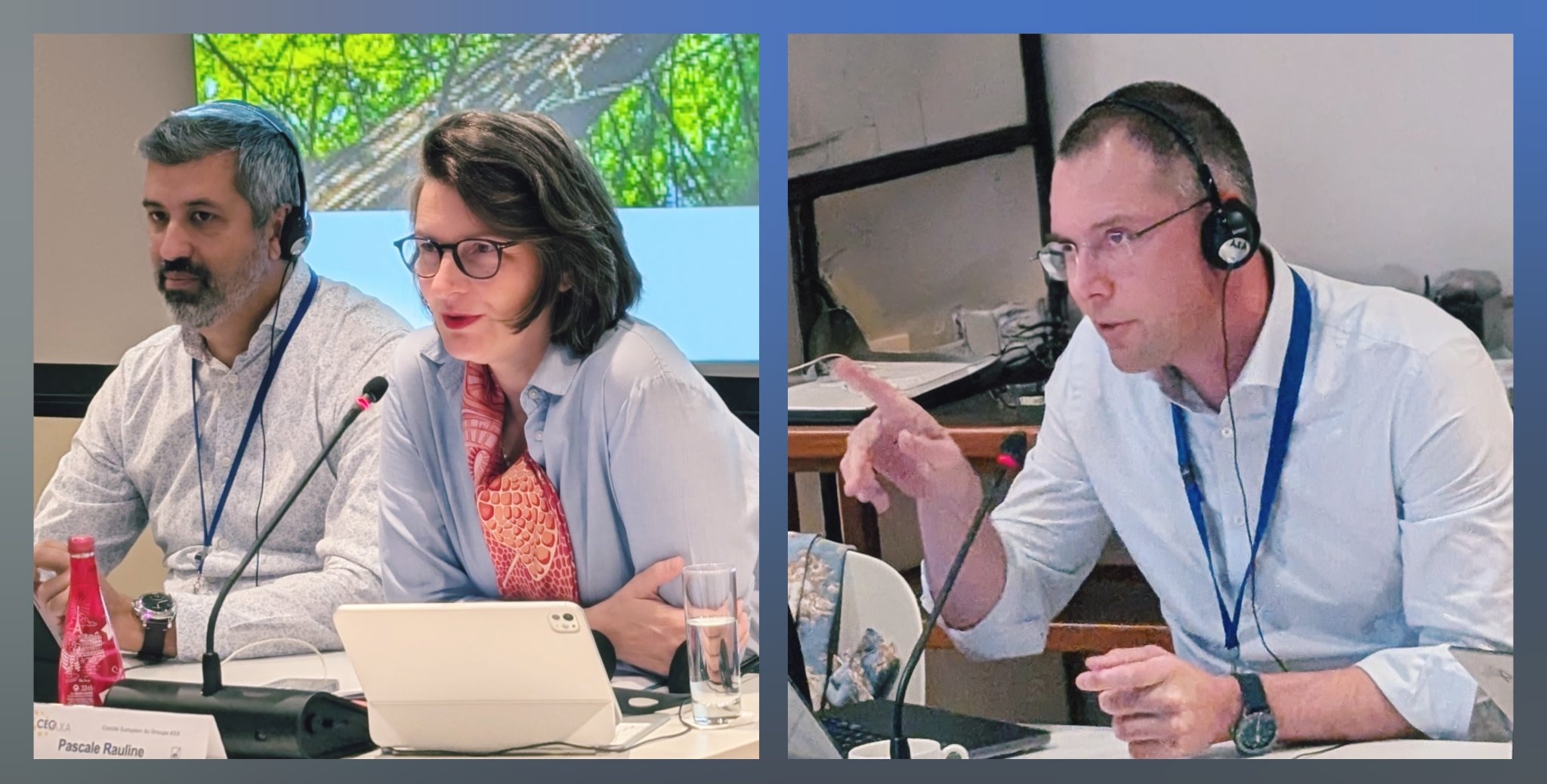
Arnaud Balthazar presents AI as a multidimensional field incorporating machine learning, large language models (LLMs), generative AI and agentic AI, which is still under development at AXA.
- Responsible commitment: AXA uses AI in a secure, ethical and human-centred manner, with robust governance based on technical robustness, human control and confidentiality.
- Perceptions and risks: Attitudes towards AI vary by region: more optimistic in Asia, more sceptical in Europe and North America. Identified risks include hallucinations, cybersecurity, intellectual property, compliance, privacy, explainability and social impact. AXA advocates a responsible approach through the principle of ‘Responsible AI’.
- Strategy and organisation: AXA is focusing on operational excellence through automation, better structuring its AI initiatives to encourage cooperation between entities, particularly for common use cases such as call synthesis and document analysis.
- Technological innovations: SecureGPT, launched in 2023, protects internal data with more than 50,000 monthly users. New features, such as translation, image analysis and a knowledge library, reduce errors and increase security.
- Agentic AI: Arnaud Balthazar discusses agentic AI, which combines predictive and generative AI, orchestrated by a planning agent and specialised agents capable of processing customer requests autonomously and in a coordinated manner. One example is the management of a claim by several agents under human control.
Pascale Rauline emphasises the importance of involving social partners more closely in AI governance in order to strengthen dialogue and ensure consistency in its deployment.
Look back on the work of the Secretariat
Pascale RAULINE emphasises that this issue was central to the articulation meetings, with employees expressing a need for stability and flexibility. In this context, it is important to clarify whether the trial phase of Smartworking arrangements that began after Covid is now over. The Group has decided to return to three days of on-site presence; it is important to take the time to engage in dialogue in order to arrive at agreed solutions that are adapted to local constraints at the end of the current agreements.
She also points out that the renewal of the secretariat members' terms of office is scheduled for 13 January.
Find the Secretariat's notes here: